
Tote Placepot vs Fixed-Odds Betting Promotion Strategy
 Available in US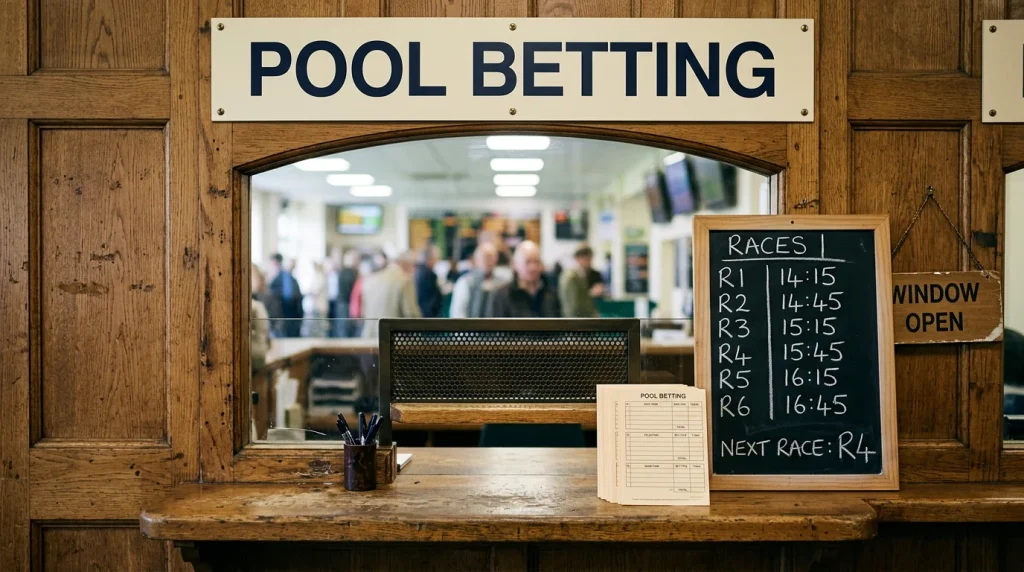
Comparing Tote Pool Dividends against Sportsbook Overrounds
I had the same conversation with a punter at Newmarket three Saturdays running last summer. He kept asking why his Placepot dividend was so much smaller than his fixed-odds returns would have been if he had backed the same horses with a bookmaker. The answer is that they are not the same product. They look alike from the outside – pick a horse in each race, hope they perform – but the prices, the rules, the promotional inventory, and the math underneath are all on different rails.
Contents On this page
Fixed-odds betting prices the bet at the moment you place it. The bookmaker sets the odds, you accept them, and your return is locked. Pool betting – the Tote model – prices the bet at the moment the race settles. The pool of all stakes is divided among winning tickets, and your return depends on how many other punters got the same legs right. Identical selections can return wildly different amounts under the two systems, and the gap is widest exactly on the days when the most casual money is in the pool.
What that means for promotional inventory is that Tote offers and bookmaker offers operate independently. Bookmaker promotions – BOG, enhanced odds, money-back specials, free bets – almost universally exclude Tote bets from eligibility. Tote-side promotions – rollover pots, bonus pool money, consolation structures – run entirely on the pool side without bookmaker overlay. Punters who do not understand which rail their bet is sitting on routinely apply the wrong promotional logic and get disappointed by the result.
How the Tote Works on Modern UK Racing
The Tote runs a pari-mutuel betting model: punters’ stakes go into a common pool, the operator takes a percentage skim (typically 18-22% depending on the bet type), and the remaining pool is divided among winning tickets in proportion to their stake. There is no fixed price; the dividend is calculated after the race based on the pool’s distribution.
For straight win and place bets, the Tote runs alongside fixed-odds bookmaker markets. Punters can choose Tote pricing or fixed-odds pricing on the same selection in the same race; the two settle independently. In practice the Tote price often comes in close to or slightly worse than the fixed-odds market at SP for popular favourites, and noticeably better for outsiders that few other punters backed. This pattern reflects how pari-mutuel mathematics actually work: the more money others put on your horse, the smaller your share of the pool.
The number of active gambling accounts in the UK stood at 24.4 million at the end of Q1 2025. A small but persistent fraction of that account base engages with Tote pool products specifically, and that fraction tends to concentrate on the Placepot and Jackpot bets rather than on Tote singles. The pool-bet brand recognition matters: most casual punters know the word “Placepot” even if they could not describe how it actually settles.
Placepot Promotions and Their Bonus Pool Structure
The Placepot is the Tote’s signature pool product. Pick a horse to place (in the first three or four positions depending on field size) in each of the first six races at a UK meeting. If your horse places in every leg, your ticket wins a share of the pool divided among all winning tickets. Stakes start at small amounts (50p or £1) and the bet’s lottery-like upside on roll-over days is the marketing pitch.
Tote promotional inventory on the Placepot runs through bonus pool money and roll-over mechanics. A bonus pool adds cash to the prize fund on selected days – usually a Saturday at a major meeting – to drive engagement. A roll-over occurs when no ticket gets all six legs right; the entire pool carries forward to the next meeting, accumulating until someone breaks it.
The structural value to punters depends on the relationship between the bonus pool money and total participation. A £100,000 bonus pool added to a Placepot that typically attracts £200,000 of stakes represents a 50% addition to the prize fund – a meaningful overlay that genuinely tilts expected value in favour of punters with rigorous selection processes. A £20,000 bonus pool added to a £400,000 stake fund is a much smaller overlay and barely moves the math.
The catch on Placepot mathematics, which punters routinely miss: the dividend is divided by the number of winning tickets, not by the number of winning ticket lines. A punter playing a “perm” – multiple selections in some legs – generates multiple winning lines, each receiving a full share of the pool if it wins. That structurally favours sophisticated punters running comprehensive perms over casual single-line tickets, particularly on the rollover days where the prize fund is largest. The number of active gambling accounts gives some sense of the underlying audience size, but the specifically Placepot-active subset is much smaller and skews toward the more engaged end of that audience.
When Tote Pricing Beats Fixed-Odds
The structural conditions under which Tote pricing outperforms fixed-odds are predictable. The first is on longer-priced selections in races where the casual money has concentrated on the favourite. A 25/1 horse in the Tote win market often settles at a meaningfully bigger dividend than the SP fixed-odds price would have paid, because the bookmaker SP includes the operator’s overround while the Tote dividend reflects the actual stake distribution on the day.
The second is on the place market for outsiders, where the same logic applies more sharply. Tote Place dividends on longer-priced placed horses regularly outperform fixed-odds each-way place returns, particularly at meetings where the casual money has been thinly spread across favourites and second favourites.
The third is on Placepot lines where you have correctly identified that the betting public has misweighted the race. A leg in which the favourite is over-bet relative to its real place chance leaves more money in the pool when the favourite fails to place, which inflates the dividend for tickets that did not include the favourite. Total horse racing betting turnover ran 4.2% below 2024 levels through Q3 2025, but the share of total racing activity flowing through Tote pools has not declined at the same rate – the engaged audience that uses pool betting has held more steadily than the casual segment that dominates fixed-odds volume.
What does not work, broadly: assuming Tote will outperform fixed-odds on favourites or popular bets. The math runs the wrong way for that segment. Casual money piles into favourites in both markets, but in fixed-odds the operator absorbs the bias through the overround while in pool betting the punters pay it among themselves through compressed dividends.
Strategy on Rollovers and Bonus Days
Rollover Placepots and bonus-pool Saturdays are where the structural value of pool betting concentrates most heavily. A Placepot rollover into a Saturday card with a substantial existing pool can produce a prize fund several times the day’s actual stake base, which means the operator’s skim becomes irrelevant and the math tilts genuinely toward punters running rigorous lines.
The strategic approach to a rollover is to widen the perm intelligently. A typical Placepot ticket might be a single line with one selection per leg (£1 stake, single line). A serious rollover attempt might be a multi-leg perm covering two or three selections in the harder legs and a single banker in the easier ones (perhaps £20-£50 in total stake, covering hundreds of lines). The math depends on the relationship between the inflated prize fund and the additional stake required to cover more lines – on big rollover days that relationship usually favours wider coverage.
The constraint is account discipline. Frequent large Placepot perms attract attention, particularly on bonus pool days where the operator is watching for sharp money. Spreading activity across multiple operators (most major bookmakers offer the Tote pool product, with a shared pool) helps, but the structural reality is that pool betting at scale generates its own attention even when it does not generate fixed-odds-style stake factor reductions.
As Ismail Vali of Yield Sec noted in the context of broader UK gambling-market dynamics, “so of 100% of stuff that you see promoting illegal gambling, 84% is not-on-Gamstop related. Not-on-Gamstop was a problem that started in 2020, we’ve said something about it every single year. And every single year, this thing doubles the size of the UK’s illegal gambling sector.” That broader regulatory pressure on the legal market is precisely why structural products like Tote pools have retained their integrity through the past several years – operators running pool bets are tightly UKGC-regulated and the product is structurally resistant to the kind of arbitrage that destabilises fixed-odds margins. For punters this means the pool product is, in some respects, the most reliable place to find genuine value on a major bonus-pool day.
Two Questions That Sort the Pool from the Fixed-Odds Side
Why do BOG offers not apply to Tote bets?
Because BOG depends on a fixed early price that the bookmaker has quoted and that can be compared with the SP at settlement. Tote bets do not have a fixed early price – the dividend is calculated after the race from the pool. There is no early price for BOG to apply to, and no SP comparison to settle against. The two products operate on fundamentally different pricing rails and BOG cannot bridge them.
Is the Placepot affordable for casual punters?
Yes, in single-line form. A 50p or £1 stake covers a single ticket with one selection per leg, which is well within the casual budget. Where it becomes expensive is on rollover days when punters widen their perm to cover multiple selections in the harder legs. A wide perm can easily cost £20-£100 in total stake, which is a different calculation entirely and one that requires understanding the dividend math before committing the money.
What Pool Betting Adds to the Inventory
Pool betting and fixed-odds betting are not substitutes for each other; they are complementary tools that solve different problems at different points in the card. Fixed-odds with bookmaker promotions handles the structural overlay on individual selections – BOG, extra places, enhanced odds, money-back specials. Pool betting with the Tote handles the value on longer-priced and lower-public-attention positions, particularly on rollover and bonus-pool days when the structural prize fund inflates beyond what the fixed-odds market can match.
Punters working both rails deliberately treat them as a portfolio rather than as competing options. Fixed-odds for the bookmaker-promoted markets where structural overlays are reliably present; pool betting for the dividend-inflated scenarios where the pari-mutuel math runs in your favour. Which leads naturally into the question of how the third major price-formation rail on UK racing – the betting exchanges – fits into the same portfolio framing, which is exactly where betting exchanges versus traditional bookmakers takes the conversation next.
Articles
Published by the Horse Racing Bet UK team.
