
Epsom Derby and Oaks Weekend: How Bookmakers Price the Most Famous Flat Race in the World
 Available in US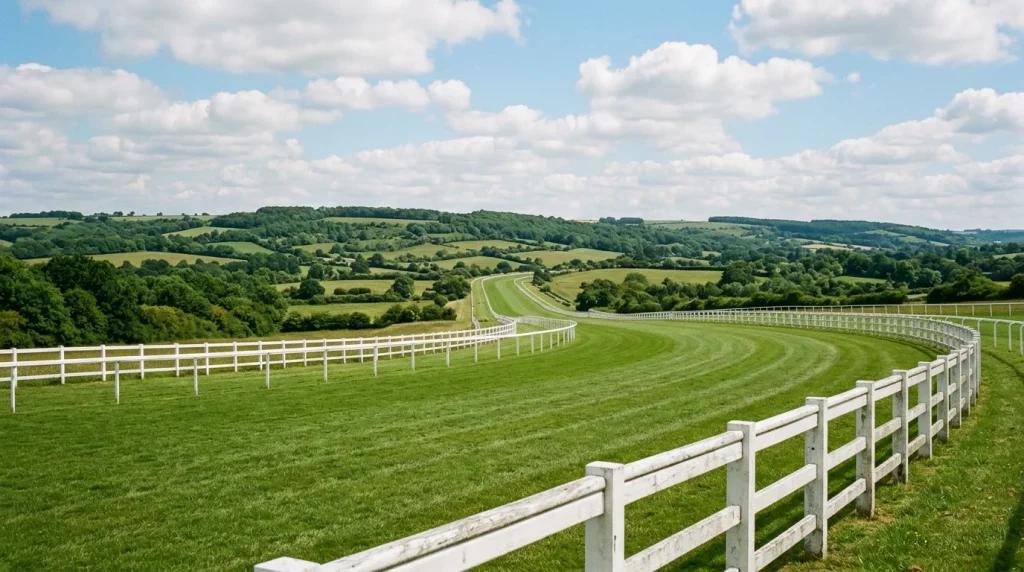
The Race That Sells the Whole Season
My first Derby on the Downs was as a teenager, dragged along by an uncle who treated the day as a mandatory annual ritual rather than as one race meeting among many. He spent most of the journey home explaining why the Derby is structurally different from every other Group 1 – the camber of the track, the descent into Tattenham Corner, the climb up the home straight, the way the trip and the gradient combine to expose horses who have never been tested in either dimension. I remember thinking he was overstating it. Twenty-five years later, I think he was understating it.
Contents On this page
The Epsom Derby is the headline race of the British flat season for casual punters and serious bettors alike. Run on the first Saturday of June over a mile and a half on the Epsom Downs, it is the third Classic of the year by date and the one with the broadest cultural reach. The Oaks – the fillies’ equivalent run on the Friday over the same trip and the same course – is the second Classic for fillies after the 1,000 Guineas, and the two races together form the operator promotional focal point of the first weekend of June every year.
For bookmakers, Derby weekend is one of the four or five most operationally significant meetings of the year. Casual stake volume is high, antepost markets have been active for over six months, and the promotional inventory layered across the two days is among the deepest of the calendar. The 7.3% growth in the UK gambling market to £16.8 billion GGY in the year to March 2025 has been visible in operator commitment to the Derby weekend specifically, with several major operators running promotional inventory at Festival-level intensity across the two days.
The Derby Track and Its Implications for Markets
Epsom Downs is one of the most demanding tracks in British racing. The Derby course is a left-handed mile and a half with substantial elevation changes – the runners climb a significant rise during the first half of the race, then descend sharply at Tattenham Corner before facing a final climb up the home straight to the finish. The combination of elevation, camber, and the sharp descent at Tattenham Corner produces a track that exposes horses with balance issues, horses with stamina questions over the trip, and horses who have not been schooled in handling significant pace shifts within a single race.
The market implications are consistent year after year. Antepost favourites for the Derby who have won their previous starts on flat, galloping tracks like Newmarket or York frequently disappoint on the Epsom contours, while horses with proven form at Chester (which has its own demanding camber) or with strong middle-distance trial wins frequently outperform their antepost prices. Sharper punters tend to view the Derby antepost markets through a “track-suitability” filter that the general public markets do not consistently apply, and the gap between sharp and casual market views produces meaningful pricing differences.
For operator promotional inventory, the Derby track produces a wider place market than equivalent Group 1s on more uniform courses. Horses who finish second or third in the Derby are often horses that few punters had considered as antepost contenders, which means extra-place offers covering five or six places provide measurable value uplift to each-way punters who back at the operator’s enhanced place terms. The mechanics of extra-place value on competitive fields apply directly to the Derby, with the track-induced variance increasing the typical value of the extended place fractions.
The Friday Oaks Card and Its Promotional Profile
The Oaks runs on the Friday of Derby weekend, the day before the Derby itself, and traditionally attracts a smaller casual-punter audience than the Saturday card. The race is the fillies’ equivalent of the Derby, run over the same mile-and-a-half trip on the same Epsom course, with the same track-suitability questions applying to a different generation of three-year-old runners. Fields tend to be smaller than the Derby – typically 10 to 14 runners compared with the Derby’s 14 to 18 – but the form lines are competitive and the antepost markets have been actively traded since the previous autumn.
Operator promotional inventory on Oaks day is typically lighter than on Derby day. Extra-place offers usually extend to five places at one-quarter rather than the six or seven places sometimes available on the Derby. Money-back specials apply but with narrower trigger conditions. Acca-related promotional structures cover Friday accumulators built across the Epsom card, sometimes in combination with selections from other Friday meetings to meet minimum-leg requirements. The full operator inventory layered onto Oaks day is meaningful for engaged punters but visibly secondary to the Saturday programme.
The Friday card supporting the Oaks typically includes the Coronation Cup, a Group 1 for older horses run over the Derby trip, and a programme of valuable handicaps and conditions races. The Coronation Cup attracts a strong field of established middle-distance Group horses, and operator inventory on the race typically includes extra places and BOG on the same terms as the headline races.
Antepost Markets and Their Six-Month Window
Antepost markets on the Derby typically open in the autumn following the runners’ two-year-old seasons, on a similar timetable to the Guineas markets. The Derby antepost markets run for substantially longer, however, because the race itself is later in the calendar – runners are racing through the spring trials throughout April and May, and the antepost prices respond to each trial result through to the week before the race itself. The window from early April to the morning of the race is the period of most active repricing.
The key trial races for the Derby include the Dante Stakes at York in mid-May, the Lingfield Derby Trial, and the Chester Vase at the May meeting. The Dante is typically the most informative trial because the course at York is fast and galloping, producing form figures that translate clearly to the Derby trip when adjusted for the Epsom contours.
For antepost punters, the period between the Dante and the Derby itself is the most active speculation window of the British flat season. Horses with strong Dante performances firm up dramatically in the Derby markets; horses whose Dante runs disappoint typically drift to twice or three times their pre-Dante prices.
The Casual Punter Pattern at Epsom
The Derby attracts a significantly broader casual-punter audience than the rest of the British flat season’s Group 1 programme. The race has been part of the British cultural calendar for over two centuries, and its broadcast reach extends to viewers who watch no other flat racing all year. The pattern of casual engagement around the Derby is similar to the pattern around the Grand National at Aintree – high stake volume from low individual stakes, sharp peaks in betting volume in the immediate hours before the off, and broad participation across age and demographic groups that other racing rarely captures.
Operator promotional inventory reflects this casual engagement. Money-back specials with broad triggers (“any horse finishes outside the first three”, “second to the SP favourite”) capture casual-punter risk perception more effectively than tighter triggers would. Extra-place offers extending to six or seven places match the broad place market that casual punters intuitively want. The 286,541 attendance at Royal Ascot 2025 has a Derby equivalent of around 130,000 to 140,000 across the two days.
For engaged punters, the casual engagement pattern produces specific opportunities. Markets distorted by casual money tend to overvalue media-favourite horses and undervalue serious contenders with less broadcast profile, and the operator extra-place offers stack with this market distortion to produce structurally favourable each-way bets on horses that the casual market is underrating.
The Promotional Layering Across the Weekend
UK operators typically run their full Festival-level promotional inventory across both Friday and Saturday of Derby weekend. The standard layering includes extra-place offers on the Oaks, Coronation Cup, Derby, and the major handicaps across both days; money-back specials with various triggers on the headline races; BOG throughout both mornings on all UK racing; acca insurance and acca boost on multi-leg bets across the weekend; price boost tokens issued in advance for use during the Festival; and bet-builder-specific promotions on the headline races.
The layering creates a substantial promotional inventory for engaged punters who hold accounts at multiple operators. A single Derby weekend can produce promotional value across all of these structures simultaneously – a winning each-way bet at extra places, a money-back refund on a different race, BOG uplift on a third bet, and acca insurance triggers on the Saturday accumulator.
The operators with the most aggressive Derby-weekend inventory are typically those with the most aggressive Royal Ascot inventory two weeks later.
The Connection to Royal Ascot Two Weeks Later
Derby weekend is positioned in the calendar exactly two weeks before Royal Ascot, and the form that emerges from Epsom feeds directly into the Royal Ascot antepost markets. Derby winners are typically considered for the King George at Ascot in late July and for autumn campaigns rather than immediately for Royal Ascot itself, but second- and third-placed horses from the Derby and Oaks often appear at Royal Ascot in subsequent Group 1s. The form lines that emerge from Epsom are among the most informative of the year for the rest of the early summer Group programme.
For operator promotional strategy, Derby weekend functions as a calibration meeting for Royal Ascot. Aggressive Derby-weekend promotional inventory that produces strong customer acquisition typically results in equally aggressive Royal Ascot inventory; thinner Derby-weekend inventory typically presages thinner Royal Ascot inventory.
The Track Where Form Falls Apart
The single most consistent observation about the Derby is that the form figures that horses bring to Epsom rarely predict their performance on the day with the accuracy they predict performance on other tracks. Antepost favourites who arrive with unbeaten records often disappoint; outsiders with patchy form figures sometimes win. The track itself is the primary cause – the combination of gradient, camber, and the sharp descent at Tattenham Corner exposes horses whose previous racing has not tested either their balance or their ability to handle pace shifts mid-race.
For operator promotional inventory, this track-induced unpredictability is the structural reason why money-back specials and extended extra-place offers run more aggressively on the Derby than on equivalent Group 1s elsewhere. The bookmakers know that the favourite is more likely to lose on Epsom than on a galloping course, and the promotional inventory is calibrated to that knowledge. For punters, the same unpredictability is the structural reason why each-way bets on Derby outsiders at extended place terms can produce returns that the underlying probabilities would not obviously support.
Where the Derby Sits in the Promotional Calendar
Derby weekend is one of the four pillars of the British flat racing promotional calendar, alongside Guineas weekend at Newmarket in May, Royal Ascot in June, and Glorious Goodwood in late July and August. The operator inventory layered onto the first weekend of June reaches close to its maximum Festival-level intensity for the year, and the casual punter engagement pattern produces specific opportunities for engaged punters who understand both the track-induced variance of the Derby itself and the structural promotional advantages of the weekend.
The healthy approach for an engaged punter is to plan account activity around the weekend in advance – verify accounts are in good standing, ensure preferred payment methods are tested for both deposits and withdrawals, and identify which operators are running the deepest promotional inventory by the week before the meeting.
When do antepost markets on the Derby typically open?
Most major UK operators open antepost markets on the Derby in October or November the year before, immediately after the runners" two-year-old seasons close. The markets run actively through to the morning of the race and reprice significantly after each major trial race during April and May. Most markets run on non-runner-no-bet terms once the formal entries have been declared.
Why is the Derby so much harder to predict than other Group 1s?
The Epsom course combines a significant rise in the first half of the race, a sharp descent at Tattenham Corner, and a stiff finishing climb. The combination of gradient, camber, and pace shifts exposes horses with balance issues, stamina questions, or limited tactical schooling. Antepost favourites with strong galloping-course form frequently underperform on the Epsom contours, producing more upset results than equivalent Group 1s on more uniform tracks.
Are Derby promotional offers usually as deep as Royal Ascot offers?
Generally yes at the major operators. Derby Saturday typically runs at Festival-level promotional intensity – six or seven places on the Derby itself, money-back specials with broad triggers, acca insurance and boost layered across the day"s racing. The casual stake volume around Derby weekend is comparable to Royal Ascot"s individual major days, and operator promotional inventory is calibrated accordingly.
Articles
Published by the Horse Racing Bet UK team.
