
Responsible Gambling Tools and Bankroll Settings
 Available in US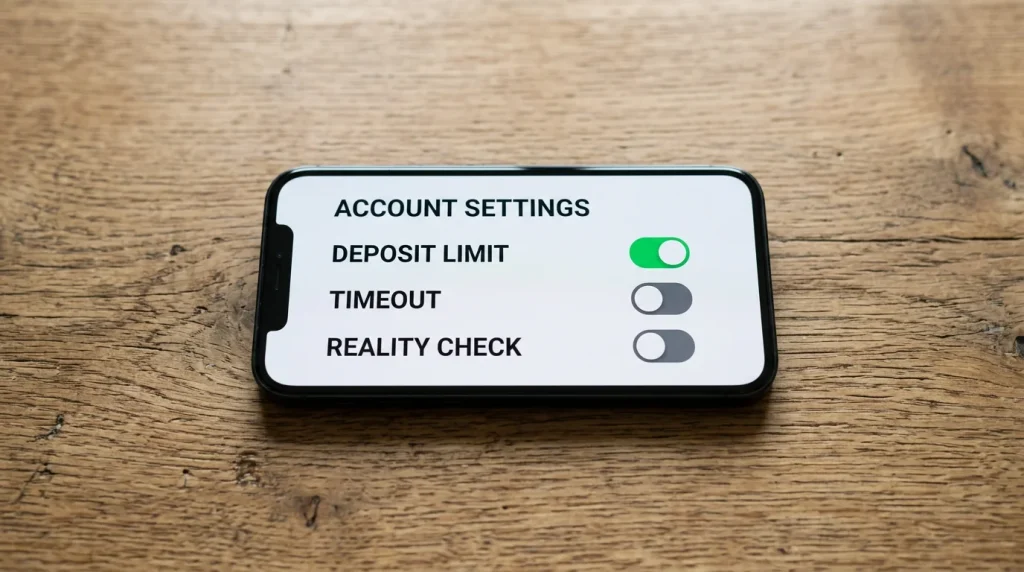
Configuring Deposit Limits and Bankroll Control Architectures
I asked a casual racing punter at York last summer whether he had ever used the deposit limit feature on his betting app. He told me, without irony, that he was not sure where to find it, but assumed it was “somewhere in settings”. That answer is more representative than the industry would like to acknowledge. UK racing accounts include a substantial portfolio of responsible-gambling tools – deposit limits, loss limits, time-outs, reality checks, self-exclusion – most of which are technically available to every customer and practically used by a small minority.
Contents On this page
The tools exist because UK gambling regulation requires them, and the requirements have tightened materially over the last several years. Operators must offer specific tool categories, must make them prominently accessible, and must apply them consistently when customers engage them. The £26 million in additional funding announced for the UK Gambling Commission over the next three years reflects the regulator’s continued focus on safer gambling, including the consistency and effectiveness of these tools across the licensed sector.
What is less well-recognised is that these tools, used thoughtfully, can also serve as practical bankroll-management infrastructure rather than only as crisis-intervention features. A deposit limit set at a level consistent with the customer’s intended monthly betting budget acts as a hard backstop against decisions that might otherwise occur in heat-of-the-moment situations. The framing of these tools as exclusively for “problem gamblers” leaves them underused by the much larger population of recreational punters who would benefit from the structure they impose.
Deposit Limits and Their Practical Application
Deposit limits are the simplest and most widely available responsible-gambling tool on UK racing accounts. The customer sets a maximum amount that can be deposited into the account within a defined time window – typically daily, weekly, or monthly – and the operator’s systems prevent deposits that would exceed the limit. The limit can be reduced at any time, with the reduction taking effect immediately. Increases to the limit are subject to a cooling-off period before they take effect, typically 24 hours, which is the structural feature that makes the limit useful as a discipline tool.
The cooling-off on increases is the key to why deposit limits work as bankroll-management infrastructure. A customer who has set a £200 monthly deposit limit and reaches it on the third Saturday of the month cannot simply raise the limit and continue betting on the day. They must request the increase, wait 24 hours, and then deposit further funds. The 24-hour window is enough time for the immediate impulse that drove the increase request to fade, and many requests are not actioned after the cooling-off period because the customer reconsiders.
The practical setup for a recreational racing punter is to set a deposit limit calibrated to the monthly racing budget at a level slightly above the typical month’s spend. This leaves headroom for the major race meetings when stakes naturally increase, while still providing a hard backstop against unusual monthly spending. Setting the limit too tight produces friction during ordinary engagement and tempts customers to disable the limit altogether; setting it too loose makes it useless as a discipline tool. The right level is specific to the individual punter’s pattern.
Loss Limits and Why They Are Different
Loss limits are conceptually similar to deposit limits but operate on a different mechanism. The deposit limit caps the funds entering the account; the loss limit caps the cumulative losses within a time window, calculated as deposits minus withdrawals during the window. A customer can deposit any amount, but if the cumulative losses across the window exceed the loss limit, further deposits are blocked even if the deposit limit would otherwise allow them.
The mathematics is more useful than the deposit limit for punters who occasionally have winning periods that fund subsequent betting. A punter who wins £500 on a Saturday Festival can subsequently lose that £500 plus an additional amount up to the loss limit before the limit triggers; the winning episode is netted into the running loss calculation. The deposit limit, by contrast, would have triggered as soon as cumulative deposits crossed the limit regardless of any winnings that had reduced the practical loss.
The trade-off is that loss limits require slightly more sophisticated tracking on the customer side. A deposit limit is easy to monitor – the account balance and the deposit history together tell the customer how close they are to the limit. A loss limit involves cumulative calculations across the time window that are less immediately visible.
Time-Outs and Reality Checks
Time-outs are short-term self-imposed account suspensions, typically available in increments from 24 hours to six weeks. The customer initiates the time-out from their account settings, selects the duration, and the account is locked from further activity for the specified period. Pending bets continue to settle normally during the time-out, but no new bets can be placed and no new deposits can be made. The time-out is reversible only by waiting for the duration to expire – the customer cannot end the time-out early.
The use case for time-outs is the specific situation where a customer recognises that their immediate engagement pattern has become unhealthy but wants to retain the long-term option of returning to racing. A 48-hour time-out at the start of a high-stress week, a one-week time-out following an unusually large losing streak, or a four-week time-out before a planned holiday all use the feature for different but legitimate purposes.
Reality checks are the lower-friction relative of the time-out. The customer sets a recurring notification – typically every 30 or 60 minutes during an active session – that displays the time spent in the session, the cumulative deposits and withdrawals, and the net position. The notification interrupts the session briefly and offers the customer the option to continue or to end the session. Most customers continue, but the periodic interruption breaks the immersive flow that can otherwise extend sessions beyond the customer’s original intention.
Self-Exclusion and the Step Beyond
Self-exclusion is the longer-term version of a time-out, with durations typically ranging from six months to five years and a one-time exclusion that can be made permanent on request. Once activated, the self-exclusion prevents any account activity at the operator for the specified period, and the operator is required to refuse re-registration attempts during the exclusion window. Self-exclusion is intended as a crisis intervention rather than a routine bankroll-management tool, and the duration options reflect that framing.
The GAMSTOP scheme operates a national multi-operator self-exclusion register that extends the exclusion across all UK-licensed operators simultaneously. A customer who registers with GAMSTOP cannot open accounts or place bets with any operator inside the UK regulated sector during the exclusion period. The scheme is operationally separate from any individual operator’s self-exclusion, and customers can use either or both depending on the scope they want the exclusion to cover.
The interaction with promotional eligibility is straightforward: a self-excluded customer receives no promotional offers from the excluded operator during the exclusion period and is not contacted by the operator’s marketing systems. The cumulative effect on the operator is to remove the customer entirely from the addressable customer base, with no remarketing or reactivation attempts permitted. The seriousness of the step matches the durability of the exclusion, and self-exclusion should not be used as a substitute for less drastic tools when the situation does not warrant it.
How These Tools Interact With Promotional Inventory
The interaction between responsible-gambling tools and operator promotional inventory is regulated and constrained. Operators are explicitly prohibited from offering promotional inducements to customers who have engaged any of the safer-gambling tools at certain thresholds. A customer who has set a low deposit limit, has engaged frequent time-outs, or has triggered the affordability-check threshold may find that promotional offers that would otherwise apply to their account are suppressed.
The suppression is not always disclosed to the customer in customer-facing terms. A customer who has engaged responsible-gambling features and notices that the promotional emails they used to receive have largely stopped is often experiencing this suppression rather than a change in the operator’s wider marketing strategy. The pattern is intentional – promotional offers targeted at customers who have signalled increased risk would be inconsistent with the operator’s safer-gambling obligations – and applies broadly across the regulated sector.
For recreational punters who use the responsible-gambling tools as bankroll-management infrastructure rather than as crisis responses, the suppression of promotional offers is a meaningful cost. The trade-off between the structural benefit of the tools and the lost promotional value is one of the calculations the regulated framework requires customers to make. The mechanics that affect welcome offer eligibility on UK racing accounts apply to existing-customer offers as well, and the engagement with safer-gambling tools is one of the inputs the operator’s systems use to determine which offers are presented to which customers.
The Behavioural Mechanics Behind the Tools
The tools that work best are the ones with friction structured against the impulsive direction. A deposit limit that can be increased instantly is structurally weaker than one with a 24-hour cooling-off; a time-out that can be ended early is weaker than one that runs to completion; a self-exclusion that can be lifted on request is weaker than one with a hard duration. UK regulation has standardised the friction in the impulsive direction across all licensed operators, which is one of the reasons the tools are reasonably effective for the customers who engage them.
The behavioural research underlying the tool design is reasonably well-evidenced. Customers who set deposit limits during periods of calm engagement and then encounter the limit during periods of emotional or financial stress respond very differently than customers who have not pre-committed to a limit. The pre-commitment provides a structural argument against the impulsive decision that does not need to be re-argued in the heat of the moment, and the cooling-off period extends that protection across the time window when impulsive decisions are most likely.
The 48% gambling participation rate across the UK adult population reported in the most recent Wave 3 figures includes a substantial fraction of recreational punters whose engagement pattern is healthy on its own terms but who would still benefit from the structure that responsible-gambling tools provide.
The Operator-Side Obligations Behind the Features
UK-licensed operators are required to provide all of these tools as part of their operating licence conditions. The specific requirements include making the tools prominently accessible, applying them consistently when customers engage them, providing clear customer-facing information about how each tool works, and routing customers who exhibit specific patterns of behaviour toward the relevant tools through automated prompts. Failure to meet these requirements has resulted in significant enforcement actions against several operators in recent years, with fines reaching into the millions.
The visible consequence for customers is that the tools are uniformly available across the licensed sector. The less visible consequence is that operators have significant commercial incentive to make the tools effective rather than ornamental.
Where the Tools Sit in a Sustainable Racing Engagement
Responsible-gambling tools are the unglamorous infrastructure that makes sustained racing engagement possible. Recreational punters who set sensible deposit limits, engage time-outs after unusual losing periods, and respond to reality-check prompts with honest reassessments of their session tend to remain engaged with racing as a leisure activity over the long term. Punters who never engage the tools and ride out emotional sessions on raw discipline alone tend to have shorter engagement arcs and more disruptive exits when those sessions go badly.
The integration of these tools into normal account management is the healthiest pattern. A deposit limit aligned with the monthly racing budget, occasional time-outs scheduled around busy life periods, and reality checks turned on for any extended session create a framework that supports racing as part of a balanced life rather than as something to be managed against discipline alone.
Can I increase a deposit limit immediately if I change my mind?
No. UK regulation requires a cooling-off period – typically 24 hours – before any increase to a deposit limit takes effect. Reductions to the limit take effect immediately. The cooling-off on increases is the structural feature that makes the limit useful as a discipline tool against impulsive decisions.
Does engaging responsible-gambling tools affect my promotional eligibility?
Sometimes yes. Operators are constrained from offering promotional inducements to customers who have engaged certain safer-gambling tools at threshold levels. The suppression of promotional offers is not always disclosed in customer-facing terms but is part of the regulatory framework around safer gambling. The trade-off between structural protection and lost promotional value is a real cost for recreational punters.
What is the difference between operator self-exclusion and GAMSTOP?
Operator self-exclusion applies only to the specific operator where it was engaged. GAMSTOP is a national multi-operator register that extends the exclusion across all UK-licensed operators simultaneously. Customers can use either or both depending on the scope they want the exclusion to cover. GAMSTOP is administered separately from any individual operator"s processes.
Articles
Published by the Horse Racing Bet UK team.
