
King George Saturday at Ascot: The Midsummer Group 1 and Its Promotional Window
 Available in US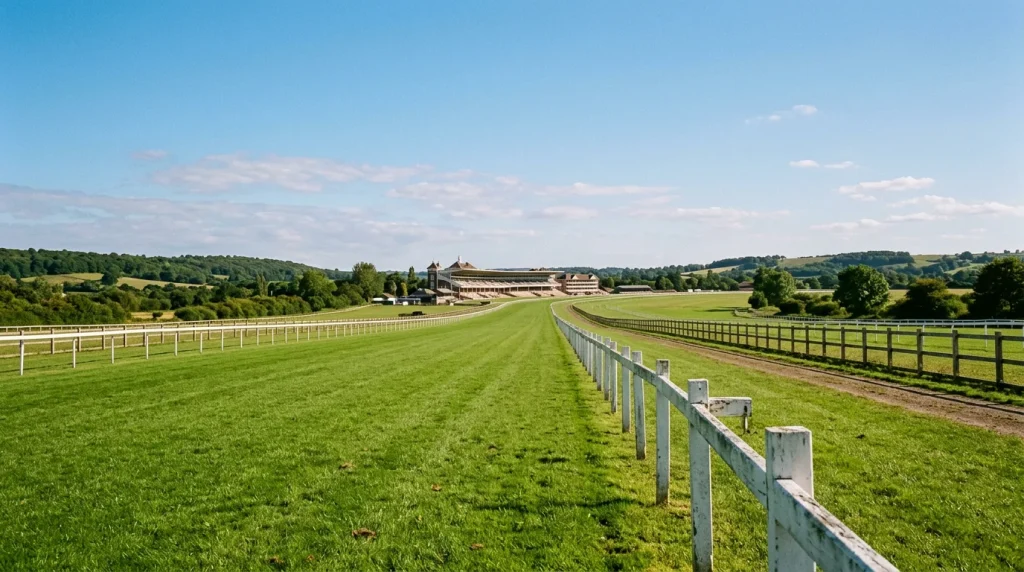
The Race That Bridges the Generations
The King George VI and Queen Elizabeth Stakes at Ascot in late July is one of the most distinctive races in the British flat calendar, and I have never quite stopped finding it the most quietly interesting Group 1 of the year. It is the only mid-summer Group 1 in Britain where the best three-year-olds meet the best older horses over the Derby distance of a mile and a half, and the head-to-head between the previous month’s Derby winner and the previous year’s Derby winner is one of the recurring fixtures of British racing analysis. The crowd at Ascot on King George Saturday is not the same crowd that fills Royal Ascot in June, and the meeting has its own particular kind of attention.
Contents On this page
King George Saturday is the Saturday of the final weekend in July, with the race itself the headline contest of a strong supporting card at Ascot. The race is one of the most prestigious middle-distance contests in the European racing calendar, attracting top horses from Britain, Ireland, France, and occasionally further afield. The race has been won by a roll of honour that includes some of the most celebrated horses in racing history, and the prestige carries across into the operator promotional inventory layered around the meeting.
For operators, King George Saturday represents the major summer Group 1 opportunity between Royal Ascot in late June and Glorious Goodwood at the end of July. The five-week gap between Royal Ascot and Goodwood is partly filled by the King George itself and partly by July Festival at Newmarket the previous weekend, but the King George is the structural headline of the middle-summer period. The 286,541 attendance at Royal Ascot 2025 dwarfs the King George Saturday attendance, but the racing is comparable in quality and the promotional inventory reflects this through a focused if smaller-scale Festival-style layering across the day.
The Race Profile and Market Structure
The King George is run over a mile and a half on the round course at Ascot, with the long sweeping turn into the home straight and the final climb to the finish that defines all Ascot races. The trip and the track favour horses with sustained speed and the ability to maintain their action through the home straight rise. Many horses who have run creditably in the Derby without finishing in the first three subsequently perform better in the King George because the Ascot track suits their action more cleanly.
The market structure on the King George reflects the cross-generational nature of the race. The market favourite is typically either the recent Derby winner stepping up against older horses for the first time, or an established four- or five-year-old returning to the trip after wins earlier in the season. The pricing rarely produces a clear odds-on favourite – the cross-generational competition produces genuine market uncertainty.
The operator promotional inventory on the race reflects this market openness. Extra-place offers typically extend the standard each-way places to five places at one-quarter or six places at one-fifth. Money-back specials commonly include “any horse beaten less than a length” or “any three-year-old finishes outside the placings” triggers that match the structural questions of the race. The mechanics of extra-place offers on competitive Group races apply directly to the King George, with the relatively small field (typically 8 to 12 runners) producing tighter place markets than the typical Group 1 sprint or handicap but with sufficient uncertainty to justify the extended place fractions.
The Supporting Card and Its Promotional Profile
The King George Saturday card features several further Group races alongside the headline, including the Princess Margaret Stakes (Group 3 for two-year-old fillies) and various conditions races. The card is structured around the King George itself rather than as a multi-Group 1 Festival, which differentiates it from Royal Ascot or Glorious Goodwood where multiple Group 1 races compete for casual punter attention across the days.
The promotional inventory across the supporting card is typically standard Saturday rather than Festival-level. BOG runs throughout, weekend acca insurance applies as usual, and price boost tokens issued in advance can be used across the card without specific restrictions. Extra-place offers on the supporting handicaps are typically standard five-place rather than the extended six- or seven-place offers seen at full Festivals. The operator focus on the King George itself produces a “single-race-Festival” pattern where the headline race attracts elevated promotional inventory while the supporting card runs at standard terms.
For engaged punters, this pattern produces a specific opportunity. The supporting card runs at standard promotional terms but the casual punter audience has been drawn to the meeting by the King George, which means the supporting races’ markets often have casual money distributed across them in patterns that less competitive meetings would not produce.
The Three-Year-Old vs Older Horses Question
The defining tactical question of the King George is whether the three-year-olds receiving weight from the older horses can use that allowance to beat the older Group 1 winners. The weight-for-age scale at the King George trip in late July gives the three-year-olds an allowance of around eleven pounds against the four-year-olds and twelve pounds against the five-year-olds and upwards. Whether this allowance is sufficient depends on the relative quality of the generations in any given year, and the answer varies materially from year to year.
In years where the three-year-old crop is exceptionally strong, the Derby winner typically wins the King George with the weight-for-age allowance providing the structural advantage. In years where the older horses include a particularly strong specimen, the King George typically goes to the four- or five-year-old despite the weight concession.
For antepost punters, the King George is one of the most informative races to track through the early summer. Antepost prices on the King George typically open in the late autumn the previous year, alongside the Derby antepost markets. The markets respond significantly to Derby and Coronation Cup results, with the King George antepost prices repricing after each major mile-and-a-half Group 1 of the early summer.
The Connection to Glorious Goodwood and the Autumn
The King George falls one week before Glorious Goodwood opens at the end of July, and the result feeds directly into Goodwood antepost markets for the King George Stakes (the Goodwood race named after the King George VI distance, though run over a shorter trip) and the Sussex Stakes. Horses that perform well in the King George at Ascot become reference points for Goodwood antepost markets within hours of the race finishing, and the antepost movement in the week between the two meetings can be material.
Further forward, King George winners typically have several autumn campaign options including the Juddmonte International at York in August, the Irish Champion Stakes at Leopardstown in September, and the Champion Stakes at Ascot in October. The form lines from the King George are among the most predictive of the autumn middle-distance programme, and antepost markets on all four of those subsequent Group 1s typically respond significantly to the King George result.
For operators, King George Saturday functions as the structural pivot between the early-summer Royal Ascot programme and the late-summer Glorious Goodwood programme. Operator promotional inventory through July typically reflects this structural position – moderate promotional layering across the month with intensification around the King George itself and the immediate run-up to Goodwood. Punters who track the operator promotional patterns across the summer can anticipate the inventory available in any given week based on its proximity to these structural pivots.
The International Dimension
The King George regularly attracts international runners from Ireland, France, and occasionally further afield. Irish-trained runners have won the race repeatedly over recent decades, and the form lines from Ireland’s Group 1 programme – the Tattersalls Gold Cup, the Pretty Polly Stakes for fillies, the Irish Derby for three-year-olds – feed directly into the King George markets.
French-trained runners typically arrive after wins in the Group 1s at Saint-Cloud and Longchamp earlier in the summer. The market typically prices the French form somewhat conservatively because the verifiable form lines between French and British racing are thinner than within either jurisdiction alone, which can produce value opportunities on French runners that the broader market is underrating.
How the Meeting Compares With Royal Ascot
King George Saturday is structurally different from Royal Ascot week in ways that affect both the racing experience and the operator promotional inventory. Royal Ascot is a five-day Festival with multiple Group 1s per day, a sustained casual-punter audience, and operator promotional inventory layered at maximum Festival intensity across all five days. King George Saturday is a single-day meeting with one headline Group 1, a more focused racing audience, and operator promotional inventory concentrated on the day rather than spread across a multi-day window.
The casual punter engagement pattern reflects this difference. Royal Ascot attracts the broader cultural audience that the Grand National and the Derby also attract; King George Saturday attracts a racing-focused audience similar to the audience at the St Leger Festival in September or at Glorious Goodwood.
For engaged punters, the contrast between the two meetings has practical implications. The Royal Ascot meeting rewards punters who can extract value from a high-volume, casually-distorted market across multiple Group races. The King George Saturday rewards punters who can identify cross-generational value in a single headline race with a deeper antepost market.
The Promotional Detail Around the Meeting
Operator promotional inventory on King George Saturday typically includes extra-place offers on the King George itself (five or six places at one-quarter or one-fifth, depending on operator and the size of the field), money-back specials with various triggers, BOG throughout the day on all UK racing, acca insurance on weekend accumulators built across the card, and price boost tokens that can be used on selected runners or specific combinations.
The terms typically tighten slightly relative to Royal Ascot equivalents – extra-place fractions extend one place fewer, money-back triggers are narrower, acca insurance caps are slightly lower. The operators with the deepest King George promotional inventory are typically those that maintain their commercial proposition around year-round flat racing engagement rather than concentrating on the headline summer Festivals. Punters who concentrate their summer racing engagement across multiple meetings typically benefit from maintaining accounts at these year-round-focused operators rather than at operators whose commercial proposition is built around Royal Ascot specifically.
The William Hill forecast of £450 million in betting turnover across the four days of Cheltenham 2026 provides a comparison point for the scale of casual stake volume at the major British Festivals. King George Saturday attracts a fraction of this volume across a single day, but the per-race promotional intensity on the King George itself is comparable to a Cheltenham Festival headline race. The operator commitment to the meeting reflects its structural position in the calendar more than its absolute casual-stake volume.
Where the Race Sits in the Year
The King George occupies a specific position in the British flat racing year – the major summer Group 1 between Royal Ascot and Glorious Goodwood, the cross-generational test that defines the relative quality of the older horse programme against the rising three-year-olds, and the form line that feeds into every subsequent autumn Group 1. For engaged punters, the meeting rewards focused engagement on a single headline race with a strong antepost window and consistent operator promotional inventory.
The healthy approach is to treat the King George as the structural pivot of the summer flat season – the race that calibrates the comparison between the early-summer Derby and Royal Ascot results and the late-summer Goodwood and autumn campaigns. Punters who track the meeting closely each year develop a reliable sense of how to read the cross-generational comparison, and the operator promotional inventory available around the race rewards this kind of focused analytical engagement.
When do antepost markets on the King George typically open?
Most major UK operators open antepost markets on the King George in the late autumn the previous year, alongside the Derby and other middle-distance Group 1 antepost markets. The markets respond significantly to Derby and Coronation Cup results during the spring, and reprice through each major mile-and-a-half Group 1 of the early summer.
Are King George promotional offers usually as deep as Royal Ascot offers?
Generally not at the headline level. Operator promotional inventory on King George Saturday typically runs at slightly tighter terms than Royal Ascot equivalents – extra-place fractions one place fewer, money-back triggers narrower, acca insurance caps slightly lower. The single-day structure of the meeting concentrates the promotional inventory on the headline race rather than spreading it across multiple Festival days.
Why is the King George considered a particularly competitive race?
The race is one of the few Group 1s in the British calendar where the best three-year-olds meet the best older horses over the Derby trip. The weight-for-age allowance to the three-year-olds in late July is structurally meaningful but not decisively large, producing genuine market uncertainty about whether the rising generation can handle the established Group 1 winners. The resulting prices on the favourites are typically wider than at single-generation Group 1s.
Articles
Written by the editors at Horse Racing Bet UK.
