
Grand National Betting Promotions and Place Terms
 Available in US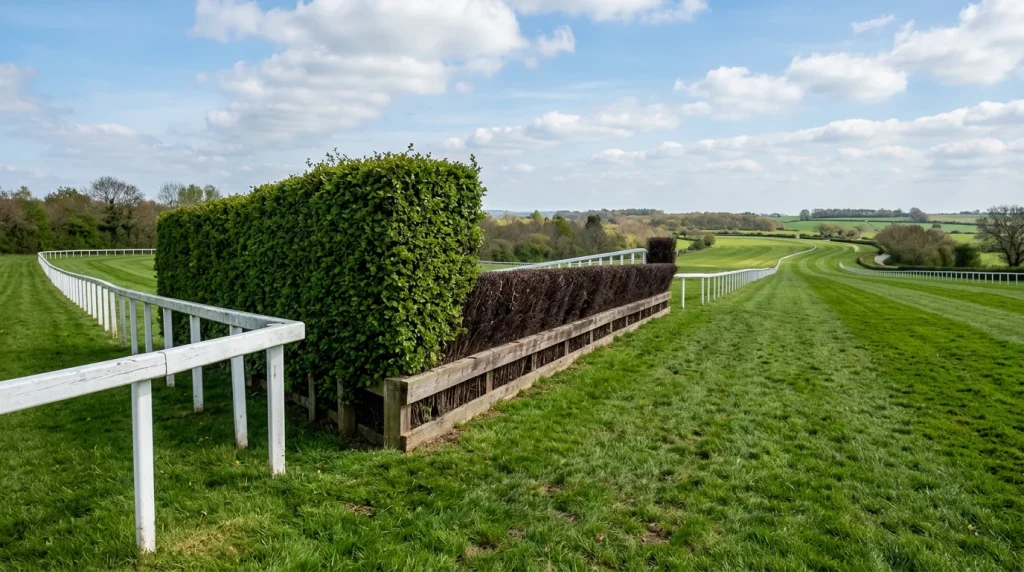
High-Volume Casual Betting Trends at the Grand National
The Grand National pulls a betting audience that does not exist on any other day. Office sweepstakes. Pensioners ringing the shop with a horse name spelled phonetically. People who could not name another race on the planet but will absolutely have a fiver on the National because they always do. According to Entain, the 2024 Grand National generated 700% more bets than the next biggest race, the Cheltenham Gold Cup – and that gap is not closing. If anything, it has widened as the festival has converted more of its viewing audience into one-bet-a-year customers.
Contents On this page
Operators design the entire promotional inventory for Aintree week around this asymmetry. Cheltenham’s audience is broadly serious, broadly literate in racing, and broadly punting across the full card. Aintree’s headline-race audience is broadly casual, broadly betting in £2 and £5 chunks, and broadly disengaged from the supporting races on the Thursday and Friday cards. 82% of cash bets on the 2024 Grand National were £5 or less; under 1% exceeded £20. That number reshapes everything about how promotions get built for the Liverpool meeting.
What that produces is a promotional menu that looks superficially similar to Cheltenham’s – extra places, money-back, BOG, enhanced odds – but is calibrated for a completely different audience. Smaller stakes, simpler triggers, more theatrical money-back specials. The math underneath looks different too, in ways that matter for any punter approaching the week with more than a fiver in their pocket.
Promotions Built for the Casual Punter
The dominant promotion type on Grand National Saturday is the small-stake money-back special. “Stake £5, get £5 back as a free bet if your horse falls” is a structure that fits the casual £5 punter perfectly. The promotion costs the operator little – most horses do not fall, and the free-bet refund applies the standard 70% cash-equivalence haircut anyway – while delivering the kind of safety-net feel that converts hesitant new customers into account holders.
The second dominant promotion type is the enhanced-price offer on a single named runner, usually capped at a low maximum stake. “Tiger Roll at 50/1 instead of 10/1, max £2 stake” is exactly the shape of offer the casual segment responds to. The cap keeps the operator’s exposure controlled; the headline number does the marketing work; the small qualifying stake nudges the punter into opening an account they would otherwise not have bothered with.
Around 800 million people across 170 countries watched the 2024 Grand National, with 150,000 attendees over the three days of Aintree Festival. The operators are not, in any meaningful sense, competing for the attention of these viewers on the merit of their racing offer. They are competing on which app a casual once-a-year punter will install and use for a single race. That changes the entire framing of what “promotion” means at Aintree compared with any other meeting.
Existing-customer promotions on Aintree week tend to be tighter than at Cheltenham, because the marketing budget is being directed at acquisition rather than retention. Free bets for established accounts are smaller, extra-places offers shallower, and enhanced odds less aggressive on the supporting cards. The Friday Mildmay and Thursday Aintree cards are particularly stripped-back; almost all the marketing oxygen is reserved for Saturday.
Extra Places on the National Itself
The Grand National routinely attracts the deepest extra-places offers in British racing. With 34 runners, multiple operators historically push the paid-place count to seven, eight, even ten or eleven positions in years where competitive pressure between major bookmakers escalates. The standard market pays four places at 1/4; extra-places offers can effectively double that.
The math on these deeper offers is genuinely good for punters who back longer-priced runners. A 33/1 horse priced as four-place-at-1/4 carries an implied place chance well below its actual probability of finishing in the top eight – Aintree’s fence attrition and the National’s unusual race shape create a longer tail of placed finishers than the win price suggests. BetVictor estimated £500 million was staked across the three days of the 2023 Aintree Festival, with £150 million on the Grand National alone, and the operators absorbing that volume can afford genuinely aggressive extra-places terms even at uncomfortable margins.
The constraint, predictable enough, is the maximum stake on enhanced-place markets. Most operators cap the extra-places offer at £20 or £25 to stake; bets above that settle on standard four-place terms. The cap means the structural overlay is available, but only in modest position sizes – which is precisely the size of stake the casual audience is placing anyway. Punters wanting to push larger volume through extra-places have to spread it across multiple operators, which raises its own account-management questions.
One quirk specific to the National: dead heats are unusually common given the field size and the unpredictable nature of the run-in, and dead-heat rules on extra-places markets are not always advertised clearly. The standard treatment – place stake split proportionally between tied finishers, with the place fraction halved – applies in most cases, but operators occasionally write bespoke terms for the National in particular. Worth reading once for the year.
Money-Back Specials and the Theatre of the Fences
Aintree’s fences are not just course features; they are promotional content. Becher’s Brook, Foinavon, the Canal Turn, the Chair – each has been used as the trigger for a money-back special at some point in the past decade. “Refund as free bet if your horse falls at Becher’s”, “money back if your horse is brought down”, “stake back if your horse refuses at the first fence” – these triggers are designed to read well in the marketing copy and to convert the high-attrition character of the race into a customer-friendly safety net.
The economics for the operator depend on the underlying probabilities. Around 13-15% of starters in a typical Grand National year fail to complete the course; falls, refusals, unseated riders and brought-down incidents make up most of that attrition. A money-back special triggered by any of those outcomes affects roughly one-in-seven bets – the operator refunds, almost always as a free bet, and absorbs the 70% cash-equivalence value of the refund as the promotional cost.
For punters the math is straightforward: the refund is a small overlay on top of the standard win-or-place bet, worth perhaps 8-10% of stake in expected-value terms depending on the specific trigger. Worth taking when offered. Not worth distorting bet sizing around. The casual audience responds to the promise of a refund more than to the actual value of the overlay, which is the whole point of the structure.
Money-back-if-second-to-SP-favourite is a related structure that attracts more sophisticated money. The trigger fires roughly 8-12% of the time depending on field strength, and the refund – usually as cash rather than free bet on this particular promotion – carries cleaner cash-equivalence. Punters running multiple positions across the Saturday card can engineer overlap with the favourite-finishing-second trigger to extract a fractional structural edge across the day.
Ante-Post Grand National and the Long Build-Up
Grand National ante-post markets open earlier than almost any other UK race – the first prices appear within hours of the previous year’s running, and serious liquidity builds from late autumn onwards as the Becher Chase and other prep races settle the form lines. The first prize for the 2026 Grand National at Aintree was set at £500,000, with total race prize money of £1 million, and the marketing pressure that the prize fund generates translates directly into the operators’ willingness to underwrite ante-post NRNB on the race.
NRNB on the Grand National historically activates earlier than NRNB on Cheltenham. Many operators offer ante-post NRNB from the first publication of the long list of entries, which can be several weeks before the final declarations. That extended window converts long-range Aintree positions from highly speculative wagers into much cleaner bets, with the early price preserved against the morning market’s compressed odds.
The compression on Grand National morning is severe. A 25/1 ante-post horse can drift to 33/1 or 40/1 if its prep runs disappoint, but more commonly the well-fancied ante-post fancies shorten dramatically as the public money pours in across the final 48 hours. The ante-post position locks in the early price; the NRNB protects against scratching; the bet runs to the line at a meaningful overlay against what the casual Saturday audience is paying.
The catch is patience. Ante-post Grand National positions are illiquid until they settle. The stake is out for weeks or months. Account restrictions on early-money customers tighten as the race approaches. And every prep race brings the risk of injury, ground preference issues, or trainer reassessment that removes the horse from the target. None of these constraints disappears just because the National is the most casually bet race of the year – for serious ante-post punters the risk profile is identical to any other long-range market.
Two Questions That Settle the Most Confusion
Are Grand National promotions typically capped at low stakes?
Yes, almost universally. The casual-led audience profile means operators design promotions around £5 to £25 maximum stakes rather than the larger caps seen on Cheltenham markets. Extra-places offers, enhanced odds and money-back specials all carry tight maximums, which constrains the structural overlay available to larger punters but suits the realistic stake size of the once-a-year audience the promotions are aimed at.
When does Fell at the last money-back usually trigger?
Most fell-at-the-last triggers fire when the named horse exits the race at the final fence, regardless of position at the time. Some operator versions require the horse to have been leading or in contention; others fire on any final-fence fall. A handful extend the trigger to the run-in elbow, which captures the famous late-stumble finishes the race occasionally produces. The exact definition is in the promotion"s terms each year.
Where Aintree Sits in the Promotion Calendar
The Grand National week is the high water mark of casual betting attention on UK racing. Cheltenham generates more total bets across its four days, but no single race anywhere on the calendar moves as much one-off money as the National itself. That asymmetry shapes everything about how operators build the promotional inventory for the week – casual-led, theatrically presented, capped tightly enough to control exposure, and structurally generous enough on extra-places to give the small-stake audience genuine overlay.
For serious punters, the value is in the structural overlays – ante-post NRNB positions taken months early, extra-places overlays on the National itself within the stake caps, and selective use of money-back specials where the trigger probabilities work in your favour. The casual promotional theatre is mostly distraction. What it is not is the model used at the calendar’s other showpiece – the five days in June where the promotional emphasis swings entirely toward Group 1 class and away from casual mass-market exposure. Which is exactly where the next layer of work lives, with the Royal Ascot offers that run on a Flat-season profile.
Articles
Written by the editors at Horse Racing Bet UK.
