
Lincoln Handicap Day Flat Season Opening Promotions
 Available in US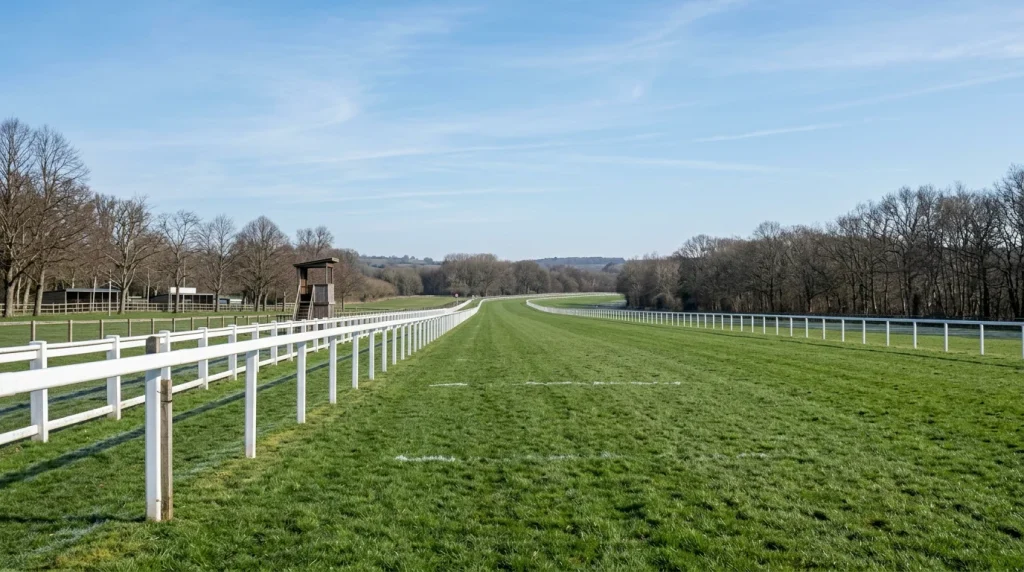
Doncaster Opener Promotions and Early-Spring Inventories
Lincoln day at Doncaster has always carried a particular kind of atmosphere – punters who have been through the jumps season suddenly recalibrating their eyes to flat horses they have not thought about for six months. I usually spend the morning of the Lincoln in a coffee shop near the course, watching trainers and stable staff walking past on their way in, and reading the racecard with the same nervous reset every year. The first major flat handicap of the season is a market that nobody quite trusts, and that mistrust shows up in the promotional inventory bookmakers put out for the meeting.
Contents On this page
The Lincoln Handicap is the headline race at Doncaster’s spring meeting, traditionally run on the straight mile in late March or early April. It is a Heritage Handicap with a full field of 22 runners, an open market that rarely produces obvious favourites, and a track that rewards specific running styles that do not always translate from the previous season’s form. For bookmakers, it is a chance to push extra-place promotions, money-back specials, and acca insurance on a card where casual money is keen to engage but reluctant to commit large stakes.
The market structure on the Lincoln is unusual in UK racing. Antepost markets typically open weeks before the race with NRNB terms, but those markets are often distorted by ground-condition uncertainty – Doncaster in late March can present anything from heavy to good-to-firm depending on the spring weather. Same-day prices are usually significantly different from the antepost-priced favourites because the ground confirms one running style over another in the final 48 hours.
The Promotional Pattern That Returns Every Spring
The bookmaker promotional menu for Lincoln week follows a predictable shape that has become standardised across the major operators. The headline offer is almost always extra places – typically five or six places paid on the Lincoln itself, where the standard each-way terms would otherwise pay four places at one-quarter the win odds. The promotional uplift is presented as a way of giving casual punters more outcomes, but it is also a recognition that 22-runner handicaps on a straight mile produce close finishes and place returns are often the realistic upside on each-way bets.
The secondary offer is usually a money-back-as-free-bet on horses that finish second to the SP favourite, or in some variants, second to any runner from a particular yard. These promotions are common across major handicaps throughout the year, and Lincoln day attracts the kind of casual volume that justifies running them – punters who want a betting interest in the race without taking on the full variance of a single-horse bet. The effective value of these refunds depends heavily on whether the refund is paid in cash or as a free bet, as the mechanics in how free bets compare against stake-returned tokens determine.
The tertiary offer is acca insurance, applied to four-fold accumulators across the day’s racing – Lincoln plus the supporting handicaps plus selected races from any other meetings running concurrently. The insurance terms tend to be tighter on Lincoln day than on standard weekends because the volume of casual accumulator stakes is higher, and operators want the cost of insurance to scale with their pricing of the underlying race.
The Track and Its Implications for Bet Builders
The Doncaster straight mile is a course that rewards horses that can settle in mid-division and produce a sustained finishing kick over the final three furlongs. Front-running specialists rarely win the Lincoln because the field is too large for any one horse to dictate uncontested early fractions. Closing types rarely win either, because the early pace usually lacks the sting needed to set up a strong finishing kick. The horses that win tend to be tracking types – able to sit in the second or third row of the field, find a clear run when the gaps appear in the final two furlongs, and produce enough acceleration to handle the closing stages without giving up ground.
That track profile shapes how bet builder and combination products price the race. The “winner plus place” bet builders that are popular on big handicaps typically struggle on the Lincoln because the place market is hard to call when 22 runners can finish within two lengths of the winner. The “winner plus beaten favourite” construction is more reliable because a strong favourite is the exception rather than the rule on this race – most editions of the Lincoln have produced co-favourites or short prices between 5.0 and 8.0 rather than clear odds-on shots.
For the same reason, forecast and tricast markets on the Lincoln tend to offer better value than on smaller-field handicaps. The variance on which two horses finish first and second is high enough that the bookmaker margin on those markets is partially offset by the genuine difficulty of the prediction. Punters who like combination products on big handicaps often find Lincoln day a useful test of those products because the race is open enough that no single combination is heavily favoured.
How Antepost Terms Shape the Run-In
Antepost markets on the Lincoln typically open in early February, six to eight weeks before the race, with most major operators running on non-runner-no-bet terms once the entries are confirmed. The NRNB terms matter on this race because Doncaster’s weather window in late March produces a meaningful rate of trainer withdrawals – horses pulled out because the ground has come up softer or firmer than the trainer’s plan accommodates. A non-NRNB antepost bet on the Lincoln runs a measurable risk of being lost to a withdrawal rather than a result.
The trade-off in NRNB markets is the slightly shorter price the bookmaker offers to cover the option value of stake return. On the Lincoln, the NRNB premium relative to non-NRNB equivalents typically sits between 5% and 15% of the price, which is the bookmaker’s pricing of the withdrawal probability across the full antepost market. Whether the trade-off is worth it depends on the punter’s view of the specific horse’s likelihood of running, and which yard the horse is trained from – some yards have running plans that the antepost market struggles to read.
The £153 million in prize money distributed across UK racing in the previous calendar year was concentrated heavily on Festival and Group race programmes, but the Heritage Handicaps including the Lincoln account for a meaningful share – the Lincoln itself carries six-figure prize money and attracts entries from across the country precisely because of that purse. The 2.7% turnover increase reported in the Premier-tier racing programme has been visible on the Lincoln through deeper antepost markets and more aggressive promotional inventory from operators looking to capture the early-season flat racing audience.
Why the Spring Reset Confuses the Markets
The flat season opens at Doncaster in a state of partial information that distorts the early markets in predictable ways. Horses that ran well at the back end of the previous flat season have not raced for six months, and their fitness levels are speculative until the first run reveals them. Three-year-olds – too young for the Lincoln itself but central to the Spring Cup and other supporting handicaps – are running in handicap company for the first time, with ratings derived from juvenile form that often does not transfer cleanly to the open-age handicap pool.
This information gap rewards specific kinds of analysis. Stable form in the previous two weeks is unusually informative because it indicates which yards have horses fit and ready for the first meeting. Course-and-distance form is unusually informative on the straight mile because horses that have run well at Doncaster previously tend to handle the track better than horses with no specific Doncaster form. Pace projections are unusually difficult because the early-season fitness levels make it hard to predict which horses will be in front and which will be playing catch-up.
The bookmaker promotional menu accommodates this uncertainty by skewing toward outcomes-with-margin offers rather than single-horse promotions. Extra places, acca insurance, and money-back specials all work better commercially when the race is hard to call, because the volume of casual stakes that need a “hedge” of some kind is higher. Punters who use these promotions effectively typically combine them with selective antepost positions taken weeks earlier on horses they think the spring market underrates.
The Supporting Races on Lincoln Day
Lincoln day at Doncaster is not a single-race meeting. The Spring Cup, run earlier in the afternoon, is a six-furlong handicap that attracts a similar quality of field and similar promotional inventory, with extra-place offers typically applied to both races. The supporting races include conditional jumpers’ races on some editions, two-year-old maiden flat races on others, and a mix of handicaps and conditions races depending on the year’s programme.
The promotional inventory tends to apply across the whole card rather than to the Lincoln specifically. Acca insurance covering four-folds across the day, money-back-as-free-bet on selected races, and Best Odds Guaranteed on all UK racing from the morning onwards. Punters who concentrate exclusively on the Lincoln itself miss out on the promotional value distributed across the supporting races, where the price uncertainty is often higher and the extra-place uplift more valuable in expected-value terms.
The pattern of bookmaker promotional menus on Lincoln day has become a template for how operators package promotional inventory on other major Heritage Handicap meetings later in the season. The Stewards’ Cup at Goodwood, the Ebor at York, the Cesarewitch at Newmarket – all of them attract a similar style of promotional layering, and Lincoln day in spring is the first significant test of the year for those promotional structures.
What Lincoln Day Tells You About the Rest of the Season
The way the Lincoln runs – pace patterns, ground conditions, yards in form – provides early information about the shape of the flat season that follows. A wet Lincoln in soft ground tends to flatter horses with stamina-heavy pedigrees and prefigure a season where soft-ground stayers do well. A firm Lincoln in dry weather tends to flatter sharp, quick-acting types and prefigure a season where speed-favouring tracks like York and Goodwood produce a different kind of winner.
For promotional planning across the season, Lincoln day is the first chance to evaluate which operators are running aggressive offers and which are taking a more cautious approach. The pattern that emerges in March often persists through the spring meetings into Guineas weekend at Newmarket and into the build-up to Royal Ascot in June. Operators that lead with deep promotional inventory at Doncaster typically maintain that posture through the early flat season; those that hold back at Lincoln tend to remain conservative until the Festival programmes later in the year.
Where the Lincoln Sits in the Promotional Calendar
Lincoln day occupies a specific position in the UK racing promotional calendar – the first major opportunity for bookmakers to engage casual punters with the new flat season after a long winter dominated by jumps racing. The promotional menu that runs at Doncaster sets the tone for the inventory that follows across the spring meetings and beyond. The race itself is an entertaining puzzle on its own merits, but the surrounding promotional structure is the part that shapes how the rest of the year unfolds for operators and punters alike.
The healthy approach is to treat the Lincoln as both a betting opportunity and a calibration exercise for the season ahead. The track conditions, the ground, the running styles, and the operator promotional patterns that show up in March are reliable predictors of what to expect through to autumn. Punters who pay attention to all of those signals on Lincoln day tend to be better positioned for the major meetings that follow.
How many places do bookmakers typically pay on the Lincoln?
Standard each-way terms on a 22-runner handicap pay the first four places at one-quarter the win odds. Lincoln day promotional inventory typically extends this to five or six places at one-quarter or one-fifth the win odds, depending on the operator. The exact terms are published in the day-of-race promotional notes and vary year to year.
Are antepost bets on the Lincoln usually non-runner-no-bet?
Yes, on most major UK operators once the entries have been confirmed. NRNB terms are the standard for Lincoln antepost markets because the late-March weather window produces a meaningful rate of trainer withdrawals based on ground conditions. Pre-entry antepost prices may not run on NRNB terms.
Why is the Lincoln Handicap so difficult to predict?
The combination of 22 runners on a straight mile, ground conditions that can change in the final 48 hours, six months of accumulated rust on flat horses returning from winter break, and a track that rewards a specific tracking running style rather than front-running or pure closing produces an unusually open market. Strong favourites are rare and double-figure-priced winners are common.
Articles
Published by the Horse Racing Bet UK team.
